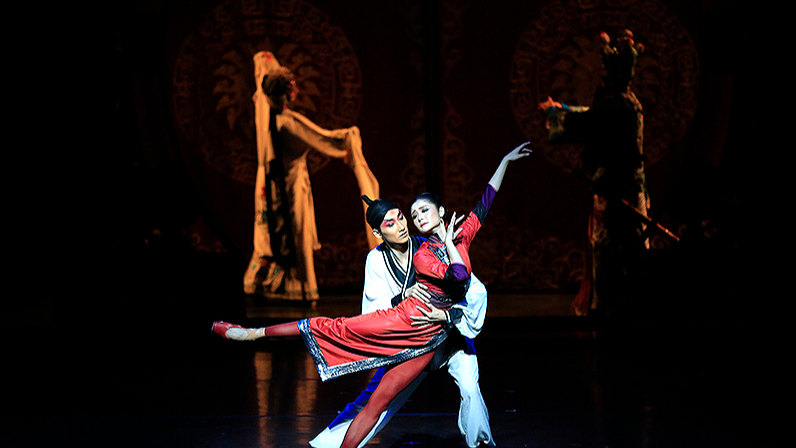
Raise the Red Lantern (Ballet)
Introduction
"Raise the Red Lantern" is a ballet in three acts, premiered by the National Ballet of China in May 2001 at the Tianqiao Theater, Beijing. It tells the tragic tale of women struggling in a traditional feudal family.
The production was led by producer Zhao Ruheng and directed by the eminent Chinese filmmaker Zhang Yimou, who also served as the artistic director and librettist.
Background and Inspiration
The ballet "Raise the Red Lantern" is inspired by Su Tong's novel "Wives and Concubines" (1990), which was adapted into a film in 1991 by Zhang Yimou, earning the Silver Lion Award. The ballet shares the film's title and is based on its narrative.
Plot Summary
Set in the 1920s, the story unfolds with a young woman forced into marriage with a wealthy, middle-aged man, who already has a wife and a concubine. Despite her lingering love for a young actor from a Peking Opera troupe, she is unable to alter her fate.
As the newly arrived second concubine, she struggles to fit into the household, facing resistance from her predecessors, who, out of fear of their husband’s authority, strive to be submissive to him. The young concubine, weary of her new life, secretly meets her old lover, but their clandestine encounters are exposed by the envious first concubine. The master, enraged by the breach of family rules, condemns the lovers to death.
Subsequently, the first concubine, in a desperate bid to regain her husband's affection, gravely offends him by lighting the red lanterns, a symbol of favor and privilege in the household. Her actions violate the strict code prohibiting anyone but the husband from handling the lantern lighter, leading to her own death sentence. On the execution site, the three condemned reconcile in their final moments.
Artistic Elements
"Raise the Red Lantern" blends traditional Chinese visuals with dramatic theatrical elements. It transports audiences to an ancient Chinese setting adorned with red lanterns, bridal palanquins, and qipao dresses featuring motifs of "double happiness" and "longevity". The ballet is acclaimed for breaking traditional ballet choreography norms, integrating Peking Opera, and utilizing cinematic expressions to enrich the performance.
Choreography and Music
The choreography dynamically extends the expressive language of dance. In one scene, dancers mimic the traditional board game mahjong, their arms sweeping across a table as if shuffling tiles. They move in measured steps, showcasing interactions and internal monologues through dance. The music, performed with traditional Chinese instruments, incorporates the sound of abacuses to create a rhythmic clicking, cultivating a tense ambiance reminiscent of an impending storm.
The ballet "Raise the Red Lantern" remains a significant cultural and artistic achievement, resonating with audiences through its rich storytelling and innovative fusion of dance, music, and theatrical elements.








